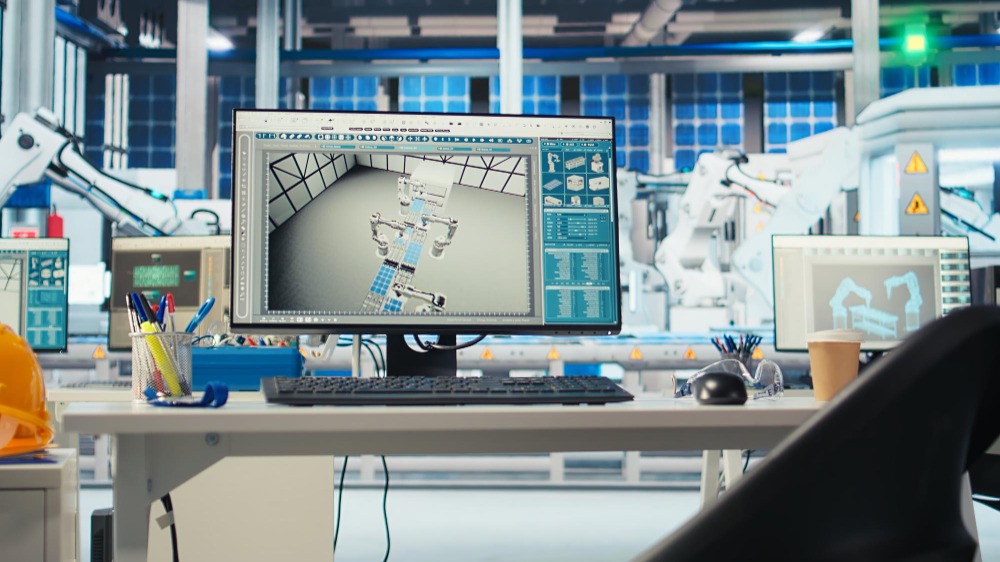
Advanced Educational Environments Designed to Support Practical Learning, Creativity, and Technology Skills

Robotics Labs UAE – Smart Learning Spaces for Future Innovation

Robotics labs UAE are rapidly becoming a core component of modern educational and training ecosystems, reflecting the growing importance of automation, artificial intelligence, and digital technologies across global industries. As schools, universities, and training institutes move toward more practical and skills-based learning models, robotics labs UAE provide an essential platform where students can transform theoretical knowledge into real-world applications.

The Growing Importance of Robotics Labs UAE in Modern Education

Why Robotics Is Essential Today

Robotics labs UAE are becoming one of the most important educational investments for institutions that want to prepare students for a technology-driven future. As automation, artificial intelligence, and digital systems continue to dominate industries, practical learning environments are essential. Robotics labs UAE provide students with real exposure to how machines, software, and systems interact in real-life scenarios.

Key Benefits of Robotics-Based Learning

Robotics labs UAE offer multiple advantages that go beyond traditional classrooms:

  • Encourages hands-on learning

  • Develops problem-solving skills

  • Builds logical and analytical thinking

  • Promotes creativity and innovation

  • Supports collaborative teamwork

Robotics labs UAE are no longer limited to higher education. Schools, training centers, and innovation hubs are integrating robotics into their learning models. This shift allows learners to move beyond theory and engage in practical problem-solving. Robotics labs UAE encourage experimentation and independent thinking, which are critical skills in today’s competitive world.

Role of Penta in Modern Learning Spaces

Penta plays a key role in developing high-quality robotics labs UAE by offering complete solutions that combine design, functionality, and long-term usability. Every space is carefully planned to ensure smooth workflow and efficient use of resources. Robotics labs UAE designed by Penta focus on user comfort, safety, and adaptability.

Collaborative Learning Environment

One of the major benefits of robotics labs UAE is their ability to promote collaborative learning. Students work in teams, share ideas, and build solutions together. This environment mirrors real professional settings where teamwork is essential. Robotics labs UAE help learners develop communication skills alongside technical knowledge.

Preparing for the Future

Robotics labs UAE also help institutions stay aligned with global education trends. Many international curricula now include robotics as a core subject. By investing in robotics labs UAE, educational organizations position themselves as modern, forward-thinking, and technologically advanced.

Turnkey Robotics Labs UAE Solutions by Penta

End-to-End Implementation

Penta delivers complete turnkey robotics labs UAE, managing every stage from planning to execution. This includes:

  • Space analysis and layout design

  • Furniture and workstation installation

  • System integration

  • Final testing and handover

By offering end-to-end services, Penta ensures that robotics labs UAE are ready for immediate use without operational delays.

Customization and Flexibility

Customization is one of the biggest strengths of Penta. Robotics labs UAE are designed based on the specific needs of each client. Whether the goal is basic learning or advanced research, robotics labs UAE can be adapted to support different objectives.

Ergonomics and Comfort

Robotics labs UAE by Penta focus heavily on ergonomics:

  • Proper seating and posture support

  • Organized layouts for smooth workflow

  • User-friendly workstation designs

These features reduce physical strain and improve concentration during long learning hours.

Durability and Safety Standards

Durability is another key feature of robotics labs UAE developed by Penta. High-quality materials ensure long-term performance even under heavy usage. Safety is a top priority, and robotics labs UAE follow international standards for secure and efficient working environments.

Long-Term Value for Institutions

Robotics labs UAE also support digital integration and future upgrades. These spaces are designed to remain relevant as technology evolves. Robotics labs UAE improve institutional reputation, attract students, and strengthen partnerships.

By choosing Penta, organizations invest in more than infrastructure—they invest in innovation, growth, and future-ready education through robotics labs UAE.

Conclusion

Modern learning environments demand more than traditional classrooms—they require spaces that inspire creativity, experimentation, and real-world application. Robotics-focused learning environments provide exactly that by bridging the gap between theory and practice. They empower students to think critically, solve complex problems, and develop future-ready skills in a hands-on way.

By investing in well-designed learning spaces, institutions can create a culture of innovation, collaboration, and continuous improvement. These environments not only enhance academic outcomes but also prepare learners to confidently step into technology-driven careers, making them a vital part of next-generation education.

Robotics labs UAE are transforming modern education and innovation by providing advanced learning environments for students and professionals. A well-equipped Robotics laboratory in UAE supports hands-on training and experimentation across various levels. Institutions are increasingly investing in Educational robotics labs UAE, including School robotics labs UAE and University robotics labs UAE, to enhance practical learning. These labs are often integrated with STEM robotics labs UAE to promote interdisciplinary education. For skill development, Robotics training labs UAE and Robotics learning labs UAE offer structured programs, while AI and robotics labs UAE and Advanced robotics labs UAE focus on cutting-edge technologies. Research institutions rely on Robotics research labs UAE and Robotics innovation labs UAE to drive technological advancements. Setting up these facilities requires expertise in Robotics lab setup UAE and comprehensive Robotics lab solutions UAE, including high-quality Robotics lab equipment UAE sourced from reliable Robotics lab suppliers UAE. Specialized environments like Robotics lab for schools UAE and Robotics lab for colleges UAE are designed to meet educational needs, while Robotics engineering labs UAE and Industrial robotics labs UAE support technical and industrial applications.Robotics labs are becoming an essential part of modern education and technological development. As industries continue to evolve with automation, artificial intelligence, and advanced engineering, the need for practical, hands-on learning environments has grown significantly. Robotics labs provide students, researchers, and professionals with the opportunity to explore, design, and build intelligent systems that solve real-world problems. These labs are not limited to engineering institutions alone. Schools, colleges, universities, and even training centers are now integrating robotics labs into their curriculum to prepare learners for future careers. By combining theoretical knowledge with practical application, robotics labs help bridge the gap between learning and real-world implementation. Importance of Robotics Labs in Modern Education Robotics labs play a crucial role in transforming traditional learning methods into interactive and engaging experiences. Instead of relying solely on textbooks, students can work on projects that involve programming, electronics, and mechanical design. This hands-on approach enhances understanding and retention of concepts. One of the key benefits is the development of problem-solving skills. Students are encouraged to think critically, analyze challenges, and come up with innovative solutions. This not only improves their technical abilities but also builds confidence and creativity. Collaboration is another important aspect. Robotics projects often require teamwork, allowing students to share ideas, communicate effectively, and work towards a common goal. These skills are highly valuable in both academic and professional environments. Key Components of a Robotics Lab A well-designed robotics lab includes a variety of components that support learning and experimentation. These typically include workstations, tools, and equipment for building and testing robotic systems. Workstations are designed to provide a comfortable and organized environment for students. They include sturdy tables, proper lighting, and storage solutions for tools and components. Safety is also a critical consideration, with features such as proper ventilation and protective equipment. The lab is equipped with essential tools such as microcontrollers, sensors, motors, and programming devices. These components allow students to design and build robots that can perform specific tasks. Advanced labs may also include 3D printers, CNC machines, and simulation software to enhance the learning experience. Applications of Robotics Labs Robotics labs have a wide range of applications across different sectors. In education, they are used to teach concepts related to science, technology, engineering, and mathematics. Students learn how to design, program, and control robots, gaining valuable skills for future careers. In research and development, robotics labs are used to explore new technologies and innovations. Researchers can test prototypes, develop new algorithms, and improve existing systems. This contributes to advancements in fields such as healthcare, manufacturing, and transportation. Training centers use robotics labs to provide specialized courses for professionals. These programs focus on practical skills that are directly applicable to industry requirements. Participants gain hands-on experience, making them more competitive in the job market. Designing an Effective Robotics Lab Creating an effective robotics lab requires careful planning and consideration of various factors. The layout should be designed to maximize efficiency and safety. Workstations should be arranged in a way that allows easy movement and collaboration. The choice of equipment is also important. It should be suitable for the intended level of learning, whether it is for beginners or advanced users. Providing a mix of basic and advanced tools ensures that the lab can cater to different skill levels. Flexibility is another key factor. The lab should be adaptable to accommodate different types of projects and activities. Modular furniture and equipment can help achieve this by allowing easy reconfiguration of the space. Benefits of Robotics Labs Robotics labs offer numerous benefits for students, educators, and organizations. One of the most significant advantages is the development of technical skills. Students learn how to work with electronics, programming languages, and mechanical systems, preparing them for careers in engineering and technology. Another benefit is the enhancement of creativity and innovation. By working on projects, students are encouraged to think outside the box and come up with unique solutions. This fosters a mindset of continuous learning and improvement. Robotics labs also improve engagement and motivation. Hands-on activities make learning more interesting and enjoyable, encouraging students to actively participate in the learning process. Challenges in Implementing Robotics Labs While robotics labs offer many advantages, there are also challenges associated with their implementation. One of the main challenges is the cost of setting up and maintaining the lab. High-quality equipment and infrastructure require significant investment. Another challenge is the need for skilled instructors. Teaching robotics requires knowledge of multiple disciplines, including programming, electronics, and mechanics. Providing proper training for educators is essential to ensure effective teaching. Maintenance and upgrades are also important considerations. Technology is constantly evolving, and labs need to be updated regularly to stay relevant. This requires ongoing investment and planning. Future Trends in Robotics Labs The future of robotics labs is shaped by advancements in technology and changing educational needs. One of the key trends is the integration of artificial intelligence and machine learning. These technologies enable robots to perform more complex tasks and make decisions based on data. Another trend is the use of virtual and augmented reality in robotics education. These tools provide immersive learning experiences, allowing students to simulate real-world scenarios and test their designs in a virtual environment. Sustainability is also becoming an important focus. Labs are increasingly using eco-friendly materials and energy-efficient equipment to reduce their environmental impact. Role of Robotics Labs in Career Development Robotics labs play a significant role in preparing students for future careers. The skills gained in these labs are highly valued in industries such as manufacturing, healthcare, and information technology. Students who have hands-on experience with robotics are better equipped to handle real-world challenges. They have a deeper understanding of how systems work and can apply their knowledge to solve complex problems. In addition to technical skills, robotics labs also help develop soft skills such as teamwork, communication, and project management. These skills are essential for success in any professional environment. Integration with Other Technologies Robotics labs are often integrated with other technologies to enhance learning and innovation. For example, combining robotics with the Internet of Things allows for the development of smart systems that can communicate and interact with each other. Integration with data analytics and cloud computing enables students to work with large datasets and develop advanced applications. This opens up new possibilities for research and development. Such integration ensures that robotics labs remain relevant and aligned with industry trends, providing students with a comprehensive learning experience. Conclusion Robotics labs have become an integral part of modern education and technological advancement. They provide a platform for hands-on learning, innovation, and skill development, preparing students for the challenges of the future. By combining practical experience with theoretical knowledge, robotics labs help bridge the gap between education and industry. They foster creativity, collaboration, and critical thinking, which are essential for success in today’s world. As technology continues to evolve, robotics labs will play an even more important role in shaping the next generation of engineers, innovators, and problem-solvers. Investing in these labs is not just about education—it is about building a future driven by innovation and technological excellence.Robotics labs are not limited to a single field of study—they bring together multiple disciplines into one cohesive learning experience. Students working in these environments often engage with concepts from electronics, programming, mechanical engineering, mathematics, and even design thinking. This interdisciplinary approach helps learners understand how different areas of knowledge connect and function together in real-world applications. For example, building a robot may involve coding its movements, designing its structure, and integrating sensors for interaction. This process encourages students to think holistically and apply knowledge from different subjects simultaneously. As a result, robotics labs become powerful platforms for integrated learning, preparing students for complex problem-solving scenarios in their future careers. Encouraging Innovation and Entrepreneurship Robotics labs also serve as incubators for innovation and entrepreneurship. Students and researchers are given the freedom to experiment, test ideas, and develop prototypes that can potentially evolve into real-world products or solutions. This environment nurtures creativity and encourages individuals to think beyond conventional methods. Many successful startups and technological solutions have their origins in lab-based experimentation. By providing access to tools, resources, and mentorship, robotics labs empower individuals to transform ideas into tangible outcomes. This entrepreneurial mindset is especially valuable in today’s competitive and innovation-driven world. Enhancing Teaching Methodologies The presence of robotics labs has significantly influenced modern teaching methods. Educators are shifting from traditional lecture-based approaches to more interactive and project-based learning models. This change not only improves student engagement but also enhances the overall learning experience. Teachers can design activities that involve building and programming robots to explain complex concepts in a more practical and understandable way. This hands-on approach helps students grasp difficult topics more effectively and encourages active participation in the classroom. Additionally, robotics labs allow for personalized learning experiences. Students can progress at their own pace, explore areas of interest, and work on projects that align with their goals. This flexibility makes learning more meaningful and impactful. Supporting Research and Development Beyond education, robotics labs play a critical role in research and development. Researchers use these facilities to explore new technologies, test innovative ideas, and develop solutions to real-world challenges. This includes advancements in areas such as automation, healthcare, agriculture, and environmental sustainability. For instance, robotics research can lead to the development of machines that assist in medical procedures, improve manufacturing efficiency, or perform tasks in hazardous environments. These innovations have the potential to transform industries and improve quality of life. Robotics labs provide the necessary infrastructure and resources for conducting such research, making them essential for technological progress. Building Future-Ready Skills One of the most significant contributions of robotics labs is their ability to equip individuals with future-ready skills. As automation and artificial intelligence continue to reshape industries, the demand for skilled professionals in these areas is increasing. By working in robotics labs, students gain hands-on experience with technologies that are shaping the future. They learn how to program, design, and operate systems that are used in modern industries. This practical exposure gives them a competitive advantage in the job market. In addition to technical skills, robotics labs also help develop critical soft skills such as problem-solving, teamwork, and communication. These skills are essential for adapting to changing work environments and collaborating effectively with others. Creating Inclusive Learning Opportunities Robotics labs also contribute to making education more inclusive and accessible. By providing hands-on learning experiences, they cater to different learning styles and preferences. Students who may struggle with traditional teaching methods can benefit from the interactive and visual nature of robotics activities. Efforts are also being made to encourage participation from underrepresented groups, including women and students from diverse backgrounds. By creating inclusive environments, robotics labs help ensure that everyone has the opportunity to explore and excel in technology-related fields. This inclusivity not only benefits individuals but also contributes to a more diverse and innovative workforce. Integration with Digital and Smart Technologies Modern robotics labs are increasingly integrating with digital technologies to enhance their capabilities. Tools such as simulation software, cloud platforms, and data analytics enable students to design and test systems in virtual environments before implementing them physically. The use of smart technologies also allows for remote access and collaboration. Students and researchers can work on projects from different locations, share data, and collaborate in real time. This expands the reach and impact of robotics labs, making them more accessible and efficient. Such integration ensures that robotics labs remain aligned with the latest technological advancements and industry requirements. Sustainability and Responsible Innovation As the focus on sustainability grows, robotics labs are also exploring ways to promote environmentally responsible practices. This includes using energy-efficient equipment, recycling materials, and developing solutions that address environmental challenges. For example, robotics projects may focus on renewable energy systems, waste management, or conservation efforts. By encouraging responsible innovation, robotics labs contribute to creating solutions that benefit both society and the environment. This approach not only enhances the relevance of robotics labs but also instills a sense of responsibility among learners. Strengthening Industry Collaboration Collaboration between educational institutions and industries is another important aspect of robotics labs. Partnerships with companies provide students with exposure to real-world challenges and industry practices. This helps bridge the gap between education and employment. Industries can also benefit from these collaborations by gaining access to fresh ideas, research insights, and a skilled talent pool. Internship programs, workshops, and joint projects create opportunities for mutual growth and development. Such collaborations ensure that robotics labs remain relevant and aligned with current industry trends and requirements. Preparing for a Technology-Driven Future The rapid advancement of technology is transforming the way we live and work. Robotics labs play a crucial role in preparing individuals for this technology-driven future. By providing hands-on experience and fostering innovation, they equip learners with the skills needed to navigate and contribute to an evolving world. As automation becomes more prevalent, the ability to understand and work with robotic systems will become increasingly important. Robotics labs provide the foundation for developing these skills, ensuring that individuals are ready to adapt to new challenges and opportunities. Conclusion The growing importance of robotics labs reflects the changing landscape of education and technology. These labs are no longer just spaces for experimentation—they are centers of innovation, learning, and development. By combining practical experience with theoretical knowledge, they create a dynamic environment that supports growth and creativity. From enhancing education and supporting research to promoting innovation and sustainability, robotics labs have a far-reaching impact. They prepare individuals not only for careers in technology but also for a future where adaptability and continuous learning are essential. As investments in robotics labs continue to grow, their role in shaping the next generation of thinkers, creators, and problem-solvers will become even more significant.

What are Robotics Labs UAE by Penta?

Robotics Labs UAE by Penta are professionally designed learning environments that support hands-on education in robotics, automation, and emerging technologies. These labs are built to help institutions deliver practical, future-focused learning experiences.

What Are the Key Features of Robotics Labs UAE?

FeatureDescription
Lab WorkstationsErgonomic setups for students to work on projects in Robotics labs UAE
Modular FurnitureFlexible tables and benches designed for Robotics labs UAE
Storage UnitsOrganized cabinets and mobile carts for Robotics labs UAE tools and equipment
SeatingComfortable stools and chairs for long hours in Robotics labs UAE
Technology StationsDedicated areas for coding, AI, and robotics experimentation in Robotics labs UAE
Custom SolutionsTailored layouts and furniture to meet specific needs of Robotics labs UAE