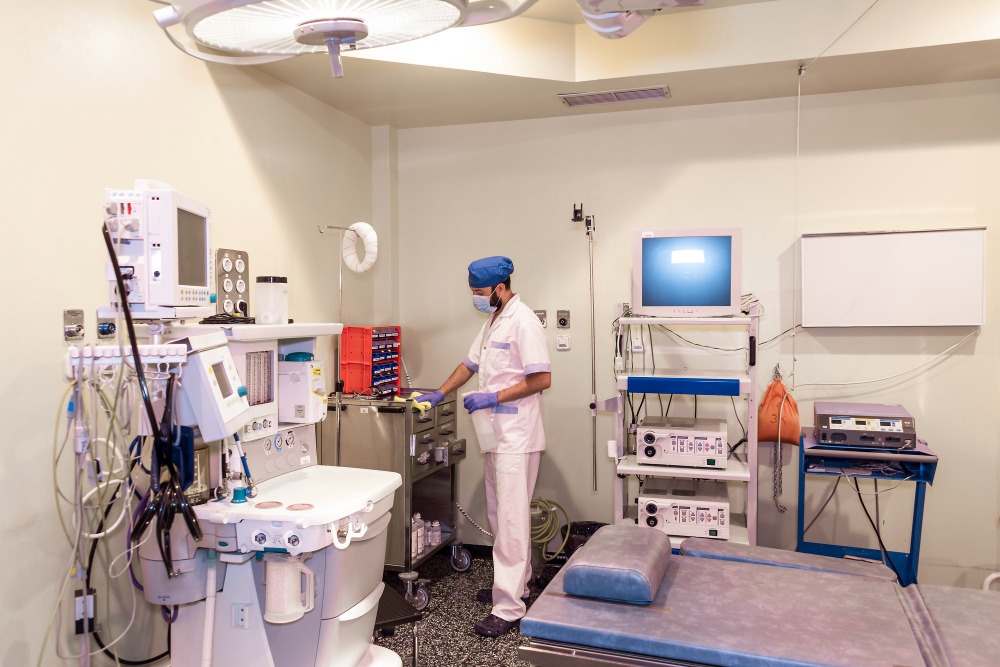
High-quality training environments by Penta for skill development and patient safety

Comprehensive Medical Simulation Lab Solutions for Advanced Healthcare Training in UAE

In today’s rapidly advancing healthcare industry, practical training has become just as important as theoretical knowledge, and Penta plays a key role in supporting this transformation. Medical professionals are expected to handle complex procedures, emergency situations, and critical patient care with accuracy and confidence. This growing demand has made hands-on learning environments essential for medical institutions. A medical simulation lab provides a realistic and controlled setting where students and healthcare staff can practice real-life clinical scenarios without risk to actual patients.

These environments replicate hospital conditions, allowing learners to develop technical skills, improve decision-making, and build professional confidence before entering real clinical practice. By integrating structured training systems, advanced layouts, and modern equipment, healthcare institutions can ensure that learning is effective, safe, and aligned with global education standards.


The Importance of Medical Simulation Lab in Healthcare Education

A medical simulation lab plays a vital role in modern healthcare education, and companies like Penta contribute significantly to making these environments effective and industry-ready. These labs create safe and controlled settings where students and professionals can practice real-life medical scenarios without putting actual patients at risk. This practical approach helps learners gain confidence, improve technical accuracy, and develop strong clinical judgment.

In today’s healthcare sector, theoretical knowledge alone is not enough. A medical simulation lab helps bridge the gap between learning and real practice by replicating clinical situations such as emergency response, patient assessment, surgical procedures, and critical care. Through carefully designed environments delivered by Penta, learners benefit from structured training that reflects real hospital workflows and professional standards.

Another key advantage of a medical simulation lab is standardized training. All learners experience the same scenarios, which ensures consistent learning outcomes across institutions. This is especially important for healthcare organizations that must meet strict quality and safety regulations. With professionally planned spaces supported by Penta, institutions can deliver reliable and repeatable training programs.

Educational Benefits

  • Improves clinical decision-making

  • Builds confidence before real patient interaction

  • Enhances teamwork and communication

  • Reduces training risks

  • Supports competency-based learning

A medical simulation lab also supports continuous professional development. Healthcare staff can regularly update their skills, learn new techniques, and stay aligned with modern medical practices. By working with experienced solution providers like Penta, institutions ensure their training environments remain adaptable, functional, and future-ready.

From an institutional perspective, a medical simulation lab helps hospitals and universities align with international education standards. Many accreditation bodies now require simulation-based learning as part of healthcare programs. By integrating professionally designed solutions from Penta, institutions demonstrate a strong commitment to quality education and patient safety.

Penta’s Turnkey Medical Simulation Lab Solutions

  1. Penta provides complete end-to-end solutions for every medical simulation lab, covering design, planning, installation, and long-term support. Each project begins with a detailed consultation where Penta analyzes institutional goals, available space, and training objectives. Based on this assessment, a customized medical simulation lab is developed to meet both current and future requirements.

    One of the key strengths of Penta is flexibility. Every medical simulation lab is designed using modular systems that allow easy reconfiguration as training needs evolve. Healthcare education is constantly changing, and a flexible medical simulation lab ensures institutions can adapt without major infrastructure changes.

    Ergonomics is another core focus of Penta. Furniture, workstations, and layouts in a medical simulation lab are designed to reduce fatigue and improve comfort during long training sessions. This enables learners to concentrate fully on skill development without physical discomfort.

    Key Features of Penta Medical Simulation Lab

    • Custom lab layouts

    • Durable and easy-to-clean materials

    • Ergonomic furniture systems

    • Scalable modular designs

    • Compliance with international standards

    Technology integration is also a major advantage of a medical simulation lab developed by Penta. Advanced digital systems allow instructors to monitor performance, track progress, and provide personalized feedback. These systems transform the medical simulation lab into a data-driven learning environment.

    Another important feature of a medical simulation lab is safety. Penta ensures that all materials, furniture, and systems follow healthcare safety regulations. This minimizes operational risks and creates a secure learning space for both students and instructors.

    From nursing colleges to large hospitals, Penta delivers a medical simulation lab that supports multiple disciplines. Whether the focus is clinical training, emergency response, or surgical education, each medical simulation lab is tailored to specific learning goals.

    Long-term value is a major reason institutions invest in a medical simulation lab. By improving staff competency, healthcare organizations experience fewer errors, better patient outcomes, and higher operational efficiency. Over time, a well-designed medical simulation lab significantly reduces training costs and improves overall healthcare quality.

    A medical simulation lab also strengthens institutional reputation. Medical colleges with modern facilities attract more students, better faculty, and international collaborations. Similarly, hospitals with in-house training through a medical simulation lab maintain higher service standards and professional credibility.

    Penta’s expertise ensures that every medical simulation lab is future-ready. With durable materials, modular layouts, and professional installation, institutions receive a long-lasting solution that evolves with healthcare demands. A Penta-developed medical simulation lab becomes a foundation for continuous learning and clinical excellence.


    Conclusion

    Healthcare education is rapidly evolving, and practical training has become a critical requirement for professional success. Institutions that invest in structured learning environments strengthen their ability to deliver high-quality services and ensure patient safety. Through expert design, customization, and technical support, Penta provides healthcare organizations with reliable and future-focused training solutions that enhance learning outcomes, improve staff confidence, and support long-term institutional growth.

Medical Simulation Lab Solutions for Modern Healthcare Training in UAE Subheading: High-Quality Medical Simulation Lab Design, Furniture & Installation Services by Penta Introduction A medical simulation lab has become an essential part of modern healthcare education and professional training. Today’s hospitals, universities, and medical institutions require realistic training environments that allow doctors, nurses, and healthcare professionals to practice skills without risk to real patients. This is why many institutions now invest in Medical lab installation services UAE to create safe, efficient, and technologically advanced learning spaces. With the rapid growth of healthcare infrastructure in the UAE, the demand for Simulation lab design Dubai and specialized medical training facilities continues to increase. From basic clinical training to advanced emergency response scenarios, a well-designed medical simulation lab supports skill development, patient safety, and long-term professional excellence. Penta provides complete turnkey solutions for Medical simulation lab Dubai and across the UAE, ensuring quality, compliance, and future-ready lab environments. Section 1: Why Medical Simulation Are Essential for Healthcare Education A medical simulation lab plays a critical role in improving the quality of healthcare training. Traditional learning methods alone are no longer enough to prepare professionals for real-world medical challenges. Simulation-based learning bridges the gap between theory and practice by allowing learners to experience real clinical scenarios in a controlled environment. Institutions that invest in Advanced medical simulation lab in UAE benefit from improved training outcomes, reduced medical errors, and better patient care. These labs are widely used in Clinical simulation lab in the UAE settings for training in surgery, emergency care, diagnostics, and patient communication. Key Educational Benefits Enhances practical clinical skills Improves decision-making under pressure Builds confidence before real patient interaction Supports competency-based learning Reduces training risks A well-planned Healthcare simulation lab UAE allows students to practice procedures such as injections, CPR, diagnostics, and patient monitoring. Similarly, a Nursing simulation lab UAE helps nursing professionals master patient care techniques, communication skills, and emergency response protocols. With professional Medical lab installation services UAE, institutions can ensure proper layout, safety compliance, and optimized workflows. Penta designs each medical simulation lab based on the specific goals of the institution, ensuring functionality, comfort, and long-term usability. Section 2: The Role of Furniture and Equipment in Medical Simulation Labs The success of a medical simulation lab depends not only on technology but also on the quality of furniture and workspace design. Specialized furniture ensures smooth movement, proper storage, and ergonomic comfort during training sessions. High-quality Medical simulation lab furniture supports daily operations by providing durable, easy-to-clean, and modular solutions. Similarly, Medical simulation lab furniture Dubai is designed to meet international healthcare standards while maximizing space efficiency. Important Furniture Components Healthcare training lab furniture for professional learning setups Clinical simulation lab furniture for realistic hospital environments Nursing lab furniture UAE for patient care training Hospital training lab furniture UAE for multidisciplinary use Functional work areas are created using Medical lab workstations UAE, which help students and trainers manage equipment, documents, and digital systems efficiently. Storage is equally important, and Simulation lab cabinets UAE provide organized space for tools and instruments. Training activities require stable surfaces, which is why Medical training lab tables are designed for durability and hygiene. For specialized learning, Anatomy lab furniture UAE supports medical models and dissection tools, while Emergency simulation lab furniture UAE enables high-pressure scenario training. A well-organized medical simulation lab also includes proper storage solutions such as Medical lab storage units to maintain cleanliness, safety, and accessibility. Section 3: Custom Simulation Lab Solutions by Penta Every institution has unique training requirements, which is why Penta offers Custom simulation lab furniture in UAE tailored to specific needs. From small nursing labs to large hospital training centers, Penta provides complete solutions for Medical simulation lab Dubai and across the UAE. Key Features of Penta’s Solutions Custom lab layouts based on available space Ergonomic and modular furniture systems Durable and easy-to-maintain materials Compliance with healthcare safety standards Scalable designs for future expansion Through professional Simulation lab design in Dubai, Penta ensures optimal workflow, learner comfort, and efficient use of space. Each medical simulation lab is planned to support long training sessions, group activities, and digital integration. Section 4: Long-Term Value of Medical Simulation Lab Investing in a medical simulation lab is a long-term strategic decision for healthcare institutions. These labs enhance institutional reputation, improve student outcomes, and attract high-quality professionals. Institutions using Advanced medical simulation lab in the UAE experience better staff performance, reduced operational risks, and improved patient safety. A modern Healthcare simulation lab UAE also helps meet accreditation requirements and global education standards. By partnering with Penta for Medical lab installation services in the UAE, institutions receive reliable support, professional installation, and future-ready infrastructure. Conclusion A medical simulation lab is no longer optional in modern healthcare education. It is a critical tool for developing skilled professionals, improving patient safety, and supporting continuous learning. From Clinical simulation lab UAE to Nursing simulation labin the UAE, these environments transform traditional education into practical, immersive experiences. With expert Simulation lab design Dubai, high-quality Medical simulation lab furniture in the UAE, and professional installation, Penta delivers complete solutions that meet the evolving needs of healthcare institutions across the UAE. A well-designed medical simulation lab is an investment in quality, safety, and long-term excellence.Healthcare education has changed dramatically over the last decade. Traditional classroom-based learning is no longer enough to prepare medical professionals for the complex realities of modern healthcare systems. Doctors, nurses, technicians, and emergency responders must now be trained in environments that replicate real-life situations as closely as possible. This shift has led to the development of advanced training spaces that focus on hands-on experience, practical learning, and continuous skill improvement. These modern learning environments allow students and professionals to practice procedures, make decisions under pressure, and develop confidence before interacting with real patients. Instead of relying only on textbooks and observation, learners actively engage in realistic scenarios that help them understand both technical and human aspects of medical care. Penta specializes in creating such future-ready training environments. By combining thoughtful design, high-quality materials, and professional planning, Penta supports institutions in delivering effective and sustainable healthcare education. Section 1: The Importance of Practical Learning in Healthcare Healthcare is one of the few professions where mistakes can have serious consequences. This is why practical learning is essential. Professionals must be able to apply theoretical knowledge in real situations, often under stress and time pressure. Modern training environments allow learners to practice clinical skills without risk. They can repeat procedures multiple times, analyze outcomes, and improve performance based on feedback. This process builds confidence, reduces anxiety, and strengthens professional competence. Key Benefits of Practical Learning Improves clinical decision-making Reduces fear and hesitation Enhances technical accuracy Builds confidence through repetition Supports ethical and responsible practice Another important advantage is consistency. All learners can experience the same scenarios, ensuring standardized education across institutions. This is particularly important in healthcare, where professional competence must meet strict global standards. Practical learning also improves communication skills. Healthcare professionals must communicate clearly with patients, families, and colleagues. Training environments allow learners to practice empathy, listening, and teamwork, which are just as important as technical knowledge. Section 2: How Realistic Environments Improve Performance Realistic environments create immersive learning experiences. Learners feel emotionally and mentally involved, which improves memory retention and skill development. Instead of passively absorbing information, they actively participate in problem-solving and decision-making. These environments also support error-based learning. Learners can make mistakes, reflect on them, and improve without causing harm. This encourages experimentation and critical thinking, which are essential for professional growth. Performance Improvements Faster response times Better coordination within teams Stronger leadership skills Higher confidence levels Improved stress management By experiencing realistic situations repeatedly, learners develop automatic responses to emergencies. This reduces panic and increases efficiency in real clinical settings. Section 3: The Role of Design in Learning Spaces Design plays a major role in the effectiveness of any learning environment. Poorly designed spaces can limit movement, reduce concentration, and create safety risks. Well-designed spaces, on the other hand, improve comfort, workflow, and overall learning experience. Good design considers lighting, ventilation, layout, storage, and accessibility. Each element contributes to learner performance and well-being. For example, ergonomic furniture reduces physical strain during long sessions, while organized storage improves efficiency and safety. Key Design Principles Functional layouts Ergonomic workstations Easy maintenance materials Clear movement paths Flexible and modular structures Penta focuses on these principles to create spaces that support both learning and long-term use. Every project is customized based on institutional needs, available space, and future growth plans. Section 4: Technology as a Learning Enabler Technology has become an essential part of modern education. Digital systems allow learners to interact with virtual scenarios, track performance, and receive detailed feedback. This data-driven approach improves accuracy, accountability, and continuous improvement. Recording systems enable instructors to review sessions and provide constructive feedback. Learners can observe their own behavior, identify mistakes, and improve techniques. This reflective learning process strengthens critical thinking and professional awareness. Technology Benefits Real-time performance analysis Automated feedback systems Remote learning opportunities Interactive digital scenarios Enhanced engagement levels Technology also supports blended learning models, where physical training is combined with digital modules. This makes education more flexible, accessible, and scalable. Section 5: Long-Term Impact on Patient Safety One of the most important outcomes of modern training environments is improved patient safety. Well-trained professionals make fewer mistakes, communicate better, and respond more effectively to emergencies. Repeated practice builds muscle memory and reduces hesitation. Professionals become more confident in performing procedures, managing stress, and coordinating with teams. This leads to better clinical outcomes and higher patient satisfaction. Safety Improvements Reduced medical errors Faster emergency response Better communication Stronger ethical awareness Higher quality care Patient safety is not just about technical skills. It also involves empathy, professionalism, and emotional intelligence. Training environments help learners develop these qualities through role-based scenarios and reflective discussions. Section 6: Institutional Benefits of Modern Training Spaces Institutions that invest in high-quality learning environments gain multiple advantages. They attract more students, improve reputation, and meet international accreditation standards. These spaces also support faculty development and research activities. From a business perspective, modern training spaces reduce operational risks and long-term costs. Better-trained staff require less supervision, make fewer mistakes, and deliver higher quality services. Institutional Advantages Stronger brand reputation Higher student enrollment Better staff performance Improved compliance Long-term cost savings Penta supports institutions throughout this transformation by offering professional planning, design, and installation services. Each project is treated as a long-term partnership focused on sustainable growth. Section 7: The Future of Healthcare Education Healthcare education will continue to evolve. New technologies, treatment methods, and patient expectations will require continuous adaptation. Learning environments must be flexible, scalable, and future-ready. Future trends include virtual reality, artificial intelligence, and remote training platforms. These tools will further enhance accessibility and personalization of education. However, human interaction will always remain essential. No technology can replace empathy, communication, and ethical judgment. This is why modern training spaces focus on both technical and human skills. Conclusion Healthcare education is no longer limited to classrooms and textbooks. Modern learning environments provide practical, immersive, and realistic experiences that prepare professionals for real-world challenges. These spaces improve skills, confidence, teamwork, and patient safety. By investing in well-designed training environments, institutions strengthen their educational impact and contribute to better healthcare systems. With professional planning, thoughtful design, and long-term support, companies like Penta play a key role in shaping the future of healthcare education. This approach not only benefits learners and institutions but also improves overall quality of care, ensuring safer, more effective, and more compassionate healthcare for society.

What is a medical simulation lab and how does Penta support it?

A medical simulation lab is a specialized training environment designed to help healthcare students and professionals practice clinical procedures in a safe and controlled setting. Penta supports medical simulation labs by providing complete solutions, including customized layouts, ergonomic furniture, advanced equipment integration, and long-term technical support to ensure effective and realistic healthcare training.

What Are the Core Components of a Penta Medical Simulation Lab?

ComponentDescriptionBenefit
Simulation EquipmentHigh-fidelity manikins and clinical training systems.Enables realistic hands-on medical practice.
Lab FurnitureErgonomic workstations, tables, and storage units.Improves comfort and workflow efficiency.
Digital SystemsMonitoring, recording, and assessment tools.Supports performance analysis and learning.
Safety & HygieneEasy-to-clean surfaces and organized layouts.Ensures safe and compliant training environments.